Empty space invites the wind.

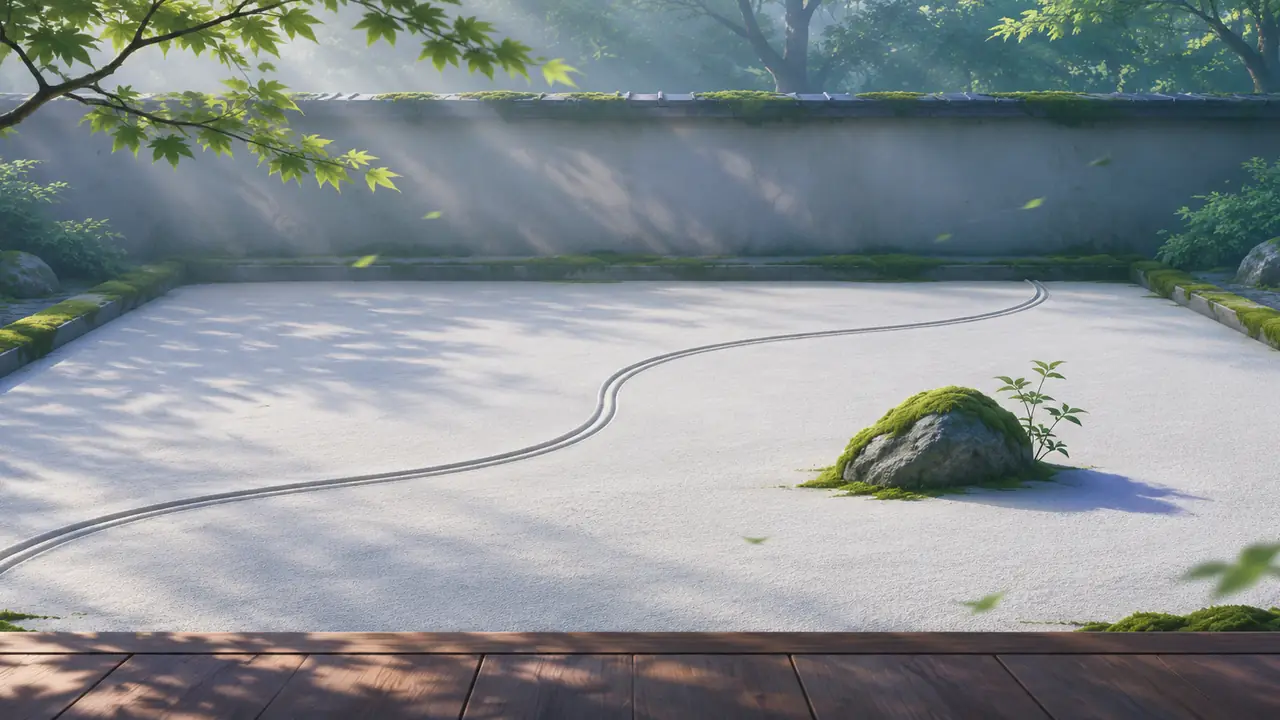
The gardener arrives at an almost empty sand bed. It already has a stone, the edge of a wooden board and enough room for the wind to leave a mark. One line drawn with the rake can make the next change visible. Zenseed Studios develops quiet puzzle concepts about learning what space can do before filling it with another action.
Move through the strip from blank sand to one groove and then to the trace a still moment makes possible. The ruler reports which stage is nearest the current view. A single mark may suggest the direction of the wind. The blank region beside it gives the gardener another way to compare what moved and what remained in place.
Follow a line until it gives you a reason to stop
The Unfinished Rake begins near a stone at one side of a pale bed. The gardener draws a groove toward the corner and decides whether to keep the part ahead of it open. A short pause lets a little drift gather beside the line. You can inspect where that drift reaches before adding another groove.
A Gap at the Gate leaves a narrow opening between two moss-covered stones. The first direction you try may turn the quiet space into a continuous edge. A smaller mark can help show that the opening needs room around it while the board at the gate shifts farther into the shade.
Keep two small observations beside each other
Garden Studies offers a view of a groove and a view of an untouched gap. Mark either detail to read its role beside the other case. The comparison belongs to the current browser and can be cleared. Garden Volumes keeps the development records in order, from the first useful groove to the last quiet approach to the gate.
Both concepts are fictional prototypes in development. The next move may be an inspection or a pause. The gardener can keep one part of the sand open long enough to learn why another place should remain undisturbed.
The first groove does not need to reach the gate for the two spaces to remain useful.